
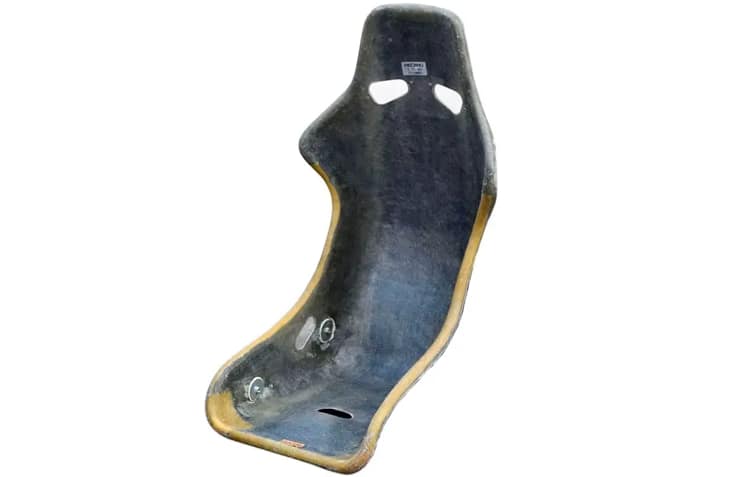
Custom Fiberglass Racing Seat Shells
Hand Lay-Up · Engineering Support · Export-Ready
DISLAB manufactures custom fiberglass racing seat shells for motorsport teams, sim racing brands, automotive aftermarket projects, and OEM buyers who need lightweight composite structures with stable quality, engineering support, and export-ready delivery.
Our seat shell projects are built around practical manufacturing control: tooling accuracy, controlled laminate build-up, curing consistency, trimming precision, and inspection traceability. Whether you need prototype development or repeat batch supply, we support the full process from drawing review to finished shipment.
Sample development, validation, and repeatable production for custom seat shell programs.
E-glass, S-glass, carbon hybrid lay-ups, and multiple resin systems based on performance targets.
DFM review, mold planning, laminate optimization, and technical coordination throughout production.
Protective packaging, documentation support, and international shipment coordination for overseas buyers.
Factory & Production Overview

DISLAB operates a dedicated composite production facility with 10,000+ sqm of workshop space, including hand lay-up stations, curing ovens, trimming and machining areas, and in-house quality control labs. Our racing seat shell production line is set up to support both prototype and batch orders, with traceability at every stage.
For custom programs, we begin with tooling and mold preparation based on your drawings, 3D files, or approved reference samples. This helps maintain accurate seat geometry, mounting fit, and stable repeatability during production. By controlling mold preparation and downstream process steps in coordination, we reduce dimensional drift and improve consistency across the batch.
Our production workflow covers custom mold building, laminate lay-up, curing, trimming, machining, surface finishing, inspection, and packing. For buyers who require additional custom composite parts beyond seat shells, you can also review our related fabrication capabilities for custom FRP bus air conditioner shells, glass fiber truck fenders, and fiberglass radar domes.
Factory photo: custom mold manufacturing used to support accurate geometry, repeatable lay-up, and stable seat shell production.Production Workflow

- Tooling & Mold Preparation: Custom molds are built based on your design, ensuring accurate geometry and fit.
- Lay-Up & Resin Infusion: Hand lay-up or vacuum-assisted processes are used to build the laminate structure, with controlled fiber orientation for optimal strength-to-weight ratio.
- Curing & Post-Curing: The composite parts are cured in controlled-temperature ovens to achieve consistent mechanical properties.
- Trimming & Machining: CNC trimming or manual finishing ensures precise edges, mounting points, and cutouts.
- Surface Finishing: Sanding, primer, and gelcoat or paint application are completed according to final visual and functional requirements.
This workflow is especially important for racing seat shells because structural performance depends not only on material choice, but also on fiber placement, resin control, curing uniformity, and clean post-processing around mounting areas and stress zones.
Production equipment photo: heavy-duty factory machinery supporting stable composite forming and process control.Quality Control Checkpoints

Quality control is integrated into the production workflow rather than separated from it. For racing seat shell manufacturing, our inspection approach focuses on laminate integrity, dimensional consistency, surface quality, and traceable production control.
- Raw material inspection: fiberglass cloth, resin systems, and core materials are checked before use.
- Laminate verification: laminate thickness and fiber orientation are reviewed against the approved build structure.
- Visual inspection: surface defects, voids, dry spots, and delamination risks are checked during and after curing.
- Dimensional control: finished parts are checked against tooling dimensions and customer drawings.
- Mechanical confirmation: hardness and resin content testing help confirm material integrity and process stability.
- Documentation support: First Article Inspection (FAI) reports can be provided on request for qualified projects.
For OEM and export buyers, these checkpoints reduce risk during incoming inspection and help support more stable assembly performance after delivery.
Inspection equipment photo: material testing setup used for composite quality verification and process control.Engineering Support
Every racing seat shell project is supported by our in-house engineering team, with attention to manufacturability, weight targets, strength requirements, and production feasibility. This is especially useful when a design needs to move from concept or prototype stage into a stable supply program.
- 3D model review and manufacturability assessment to identify geometry, draft, and mounting considerations before tooling release.
- Material selection support for strength, weight, durability, and target application environment.
- Mold and process optimization to improve consistency, reduce variation, and support batch repeatability.
- Prototype testing and iteration for design adjustment, fit review, and finish confirmation.
- Technical coordination throughout production so design, process, inspection, and delivery stay aligned.
For international buyers, practical engineering communication is often as important as the part itself. Our support model is built to keep review, sampling, production, and shipment moving through one connected workflow.
Project & Export Experience
Client Application Cases
We have supplied custom fiberglass racing seat shells to clients in motorsports, automotive aftermarket, and sim racing industries across multiple countries. These projects include professional motorsport teams, amateur racing series, sim racing simulator manufacturers, and automotive custom build shops. The common requirement across these customers is consistent structure, controlled finish quality, and dependable delivery for specialized applications.
Export & Country Experience
DISLAB has exported composite racing components to over 20 countries, including the United States, Australia, Germany, the United Kingdom, Brazil, and South Africa. We are familiar with export packaging, documentation, and international shipping requirements for high-performance composite parts.
Packaging & Shipping Protection

Racing seat shells require careful packaging because surface finish damage, edge impact, and deformation during long-distance shipment can create avoidable losses. For export orders, we can arrange individual foam wrapping, shock-resistant internal protection, and seaworthy plywood cases depending on quantity and route.
We also support export documentation and shipment coordination so the finished parts move from factory release to international delivery with fewer handling risks. This is particularly important for prototype orders, appearance-sensitive components, and mixed shipments that include multiple custom composite parts.
Export packaging photo: protective packing structure used to reduce transport damage during international shipment.Order & Technical Specifications
| Specification Item | Details |
|---|---|
| MOQ | 10 pieces for standard tooling; smaller prototype quantities available for new development. |
| Sample Lead Time | 7 to 14 working days, including mold setup, lay-up, curing, and finishing. |
| Mass Production Lead Time | 15 to 30 working days, depending on quantity and complexity. |
| Reinforcement Options | E-glass, S-glass, and carbon fiber hybrid lay-ups. |
| Resin Systems | Polyester, vinyl ester, and epoxy. |
| Core Materials | Foam and honeycomb options for structural reinforcement where required. |
| Surface Treatment Options | Primer only, high-gloss gelcoat, matte gelcoat, custom paint with RAL or Pantone matching, and carbon fiber clear coat. |
| Mounting & Installation | Custom mounting points, seat rail compatibility, and reinforcement inserts can be added based on project requirements. |
| Packaging & Shipping | Individual foam wrapping, shock-resistant crating, seaworthy plywood cases, and export documentation support. |
| Size & Customization Range | Custom dimensions, seat bucket shapes, mounting hole patterns, ergonomic changes, and structural adjustments based on drawings or samples. |
| Thickness Range | 2 to 6 mm, depending on target strength and application requirements. |
| Testing & Standards | Static load testing, impact resistance testing based on client requirements, material test reports, and optional third-party verification. |
| Customization Scope | Full custom development from drawings, 3D files, or reference samples, including mold design, lay-up optimization, and finishing. |
For faster quotation, buyers are encouraged to share drawings, target dimensions, material preference, quantity, finish requirements, and application environment.
Case Study: 50 Custom Fiberglass Racing Seat Shells Delivered to an Argentinian Client (2025)
Project Background
In 2025, DISLAB received a custom order from an Argentinian motorsport and sim racing parts manufacturer for 50 high-performance fiberglass racing seat shells. The client required a batch of lightweight, structurally consistent seat shells for a new line of sim racing rigs and amateur race cars, designed to meet ergonomic comfort standards while withstanding repeated use in competitive environments. The project also involved a tight lead time, making production stability and shipment planning critical from the start.
Project Execution & Engineering
- Custom Design & Material Validation: Our engineering team reviewed the client’s 3D models and ergonomic requirements, then selected a high-strength, low-weight laminate structure using E-glass reinforcement and epoxy resin. A prototype was produced and approved before batch manufacturing began.
- Controlled Hand Lay-Up Production: All 50 seat shells were manufactured using hand lay-up and vacuum-assisted processes to maintain consistent fiber orientation, laminate thickness, and surface quality. In-line quality checks included dimensional verification, visual defect inspection, and hardness testing.
- Custom Packaging & On-Time Delivery: We prepared protective foam inserts and custom crating for the order, completed export documentation, and arranged sea freight shipment. The full batch arrived at the client’s facility in safe condition and on schedule.
Client Feedback & Outcome
“DISLAB delivered exactly what we needed. The quality, consistency, and finish of the 50 racing seat shells were outstanding, and they arrived perfectly packaged. Their ability to meet our tight deadline was critical to keeping our sim rig production on track. We are very satisfied with the partnership.”
This project reinforced DISLAB’s capability in manufacturing custom composite parts for motorsport and sim racing applications where structural control, finish consistency, and export reliability all matter to the buyer’s final product program.
Related Composite Fabrication Projects
Large composite housing fabrication for transport and equipment projects requiring stable structure and weather resistance.
Custom fiberglass exterior parts for commercial vehicle applications with controlled tooling and finish support.
Precision composite enclosures for equipment protection, dimensional control, and outdoor application performance.
Industry Insights & Resources
Request a Custom Quote
If you are sourcing custom fiberglass racing seat shells for motorsport, sim racing, aftermarket, or OEM applications, DISLAB can support prototype development, technical review, and export-ready production.
- Send drawings, 3D files, or reference samples for review.
- Share target quantity, dimensions, finish, and application conditions.
- Ask for prototype planning, batch pricing, packaging options, or delivery lead time.
Request a Quote for Custom Fiberglass Racing Seat Shell | DISLAB
Tell us your application, dimensions or specifications, quantity, accessory requirements and destination country. Please identify the product in your message.
For drawings or project files, use the email channel on the right.
Get a Fast QuoteCustom Fiberglass Racing Seat Shell
Request a Product Quote
Send your drawing, dimensions and quantity. Our team will review the requirements and reply with the next steps.