
Drawing-based manufacturing for industrial projects
Custom Molded Fiberglass & FRP Components for OEM Applications
DISLAB supplies custom fiberglass and FRP components manufactured to customer drawings, 3D models, physical samples where applicable, or defined application requirements.
We support OEM buyers, engineers, equipment manufacturers, project contractors, and sourcing teams developing housings, covers, shells, panels, enclosures, ducts, guards, equipment body components, and other project-specific molded parts.
Each inquiry is reviewed for geometry, quantity, operating environment, finish, interfaces, and production considerations before a manufacturing approach is proposed.
What We Manufacture
Custom FRP fabrication is appropriate when a standard profile or off-the-shelf molded item does not meet the required shape, interface, environment, or production plan. Representative projects include equipment housings, machine covers, vehicle body components, protective shells, access panels, ducts, guards, and composite enclosures.
Feasibility depends on the complete project definition. DISLAB reviews the part rather than assuming that every geometry, material system, or molding method will suit every application.
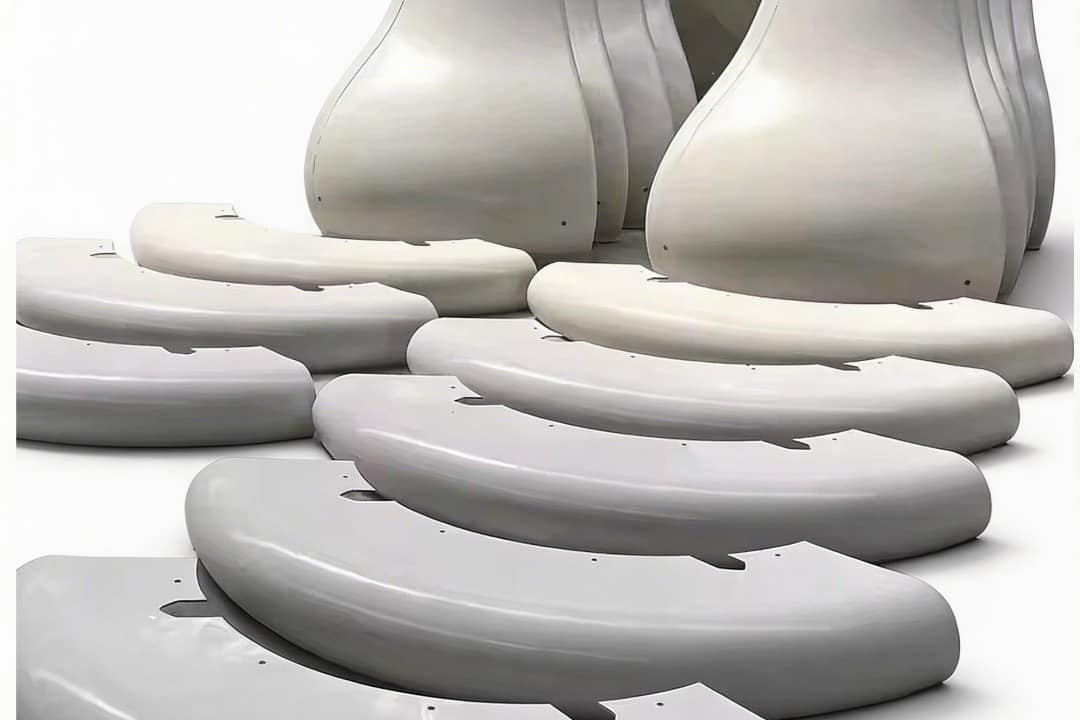
Custom FRP Manufacturing Capabilities
Project review
Evaluation may include 2D drawings, 3D models, samples, installation points, operating conditions, expected quantity, finish requirements, and schedule.
Tooling and process planning
The molding method and tooling approach are considered in relation to geometry, dimensional requirements, surface expectations, quantity, and production economics.
Prototype and production support
Development steps can be organized around design review, tooling, sample evaluation, buyer approval, and production planning as the project requires.
Materials & Resin Options
Fiberglass reinforcement may be combined with polyester, vinyl ester, or epoxy resin systems where appropriate. The resin should be selected against the complete service environment and manufacturing plan—not from a single property in isolation.
Polyester systems
May be considered for general molded components where production requirements, finish, environment, and cost align with the selected grade.
Vinyl ester systems
May be evaluated where moisture or chemical exposure is a stronger design consideration. Compatibility still depends on the specific chemical, concentration, temperature, and exposure duration.
Epoxy systems
May be considered for projects with particular structural, bonding, or laminate requirements, subject to tooling, cure, finish, and cost considerations.
Manufacturing Process Options
The appropriate process depends on part geometry, quantity, surface requirements, structural requirements, tooling strategy, and the required level of repeatability. Not every process is suitable for every component. For a practical comparison, see Hand Lay-Up vs RTM vs SMC.
Hand lay-up
A flexible option for certain large, complex, or lower-volume parts where the tooling and laminate plan support manual production.
Vacuum-assisted processing
May be considered when the part design and tooling are suitable and the project benefits from additional laminate consolidation or process control.
Compression molding / SMC
May suit repeat production where matched tooling, part geometry, finish requirements, and order volume justify the approach.
Design Features & Integration
Depending on the molding process and project review, a part may incorporate flanges, mounting areas, local reinforcement, ribs, openings, and embedded or integrated hardware. Interface details should be defined on the drawing, including critical datums, fastening method, loads, access needs, and any non-FRP hardware exposed to the service environment.
Surface Finish Options
Molded and gelcoat finishes
Gelcoat, smooth molded, or textured surfaces may be considered based on tooling, appearance, handling, and environmental requirements.
Painted and post-finished surfaces
Painted finishes, sanding, or polishing may be available where applicable. Color, gloss, texture, and acceptance criteria should be defined during project review.
Typical Applications
Industrial equipment
Machine housings, equipment covers, access panels, guards, ducts, and composite enclosures made around defined interfaces.
Transport and vehicle systems
Exterior shells, body panels, rooftop equipment covers, fenders, and other shaped components evaluated for fit, finish, loading, and exposure.
Outdoor and utility projects
Protective components where the resin, laminate, finish, hardware, and maintenance plan must be assessed against weather and service conditions.
From Drawing to Production
Requirement review
Confirm geometry, interfaces, environment, quantity, finish, and acceptance criteria.
Manufacturing plan
Review material direction, molding method, tooling approach, and production considerations.
Tooling and sample
Develop tooling and sample parts where the agreed project plan requires validation.
Buyer review
Resolve fit, appearance, interfaces, and drawing requirements before production release.
Production and packing
Manufacture, inspect, and package parts according to the confirmed order requirements.
Quality & Inspection
The inspection plan should reflect the drawing and the function of the finished component. Depending on the project, review may include drawing checks, dimensional checks, visual and surface inspection, and fit or interface checks where applicable. Any project-specific documentation or acceptance requirement should be agreed before quotation and production.
Packaging & Export Support
Packaging can be adapted to part size, geometry, surface sensitivity, quantity, and shipping method. Depending on the project, this may include protective film, foam protection, cartons, internal supports, or plywood crates. Destination and handling requirements should be included in the RFQ so the packing approach can be reviewed with the part.
Specialized FRP Product Solutions
Application-specific products retain their own engineering and commercial requirements. Continue to the relevant product page when your project fits one of these established categories.
Other specialized product pages include SMC fan hood covers, SMC roof tiles, molded drainage channels, FRP cable strength members, SMC shower bases, and septic tank products.
Information Required for a Quote
A complete RFQ helps the manufacturing team evaluate feasibility, identify open questions, and prepare a more useful response. Include the information available now; unknown items can be marked for review.
Use the Custom Fiberglass Parts RFQ Checklist to organize drawing, quantity, material, finish, inspection, packaging, and schedule inputs before sending an inquiry.
- 2D drawing or 3D model
- Physical sample, if applicable
- Overall and critical dimensions
- Expected prototype and production quantity
- Application and part function
- Operating environment
- Temperature and chemical exposure
- Resin or material preference, if known
- Surface finish and appearance requirements
- Mounting and integration details
- Inspection or acceptance requirements
- Target project schedule and destination
Not sure what to specify?
Send the available drawing, sample information, application conditions, and quantity. DISLAB can identify the remaining manufacturing questions for discussion.
Technical Guides & Engineering Resources
These existing resources provide additional background without replacing the project-specific manufacturing review.
FAQ for OEM Buyers
What information should I provide for a custom FRP quote?
Provide the drawing or model, dimensions, quantity, application, service environment, finish, mounting details, acceptance requirements, destination, and target schedule where available.
Can you manufacture from a drawing or an existing sample?
Projects may begin from a 2D drawing, 3D model, or physical sample where applicable. The available reference must still be reviewed for dimensions, interfaces, materials, and production feasibility.
Which resin system should I specify?
If the resin is not already defined, provide the temperature, chemical exposure, outdoor conditions, structural needs, finish, and cost considerations. Resin selection can then be discussed against the actual project.
How is the manufacturing process selected?
The decision depends on geometry, expected quantity, surface and structural requirements, repeatability, tooling approach, and production economics. A process should not be selected from volume alone.
Can mounting features or embedded hardware be incorporated?
Flanges, mounting areas, reinforcement, openings, and integrated hardware may be possible depending on the process and design. Define loads, datums, access, materials, and corrosion considerations on the drawing.
What surface finishes are available?
Project-dependent options may include molded, gelcoat, painted, smooth, or textured surfaces, with sanding or polishing where applicable. Agree the appearance and acceptance criteria before tooling and production.
What affects tooling and production cost?
Important factors include part size and geometry, tooling type, surface class, laminate and resin system, dimensional requirements, quantity, finishing, inspection, and packaging.
How should dimensional tolerances be specified?
Identify functional datums, mating interfaces, critical dimensions, and the inspection method on the drawing. Achievable tolerances must be reviewed against the geometry, tooling, material system, and molding process.
Request a Quote for Custom Molded Fiberglass & FRP Components for OEM Applications
Tell us your application, dimensions or specifications, quantity, accessory requirements and destination country. Please identify the product in your message.
For drawings or project files, use the email channel on the right.
Request a Custom FRP Project Review
Use this form to request a quote or discuss your custom FRP component project. Drawings, models, sample details, dimensions, quantity, and operating conditions will help the team assess the next steps.
Please avoid sending confidential files until the appropriate information-sharing terms are in place.

Get a Project QuoteCustom fiberglass and FRP components
Request a Product Quote
Send available drawings, dimensions, quantity, application, and operating conditions for review.