
Choosing the correct pneumatic PU hose is critical for maintaining system efficiency and preventing costly downtime in industrial automation. Polyurethane (PU) tubing has become the gold standard for compressed air systems due to its unique balance of flexibility and durability.
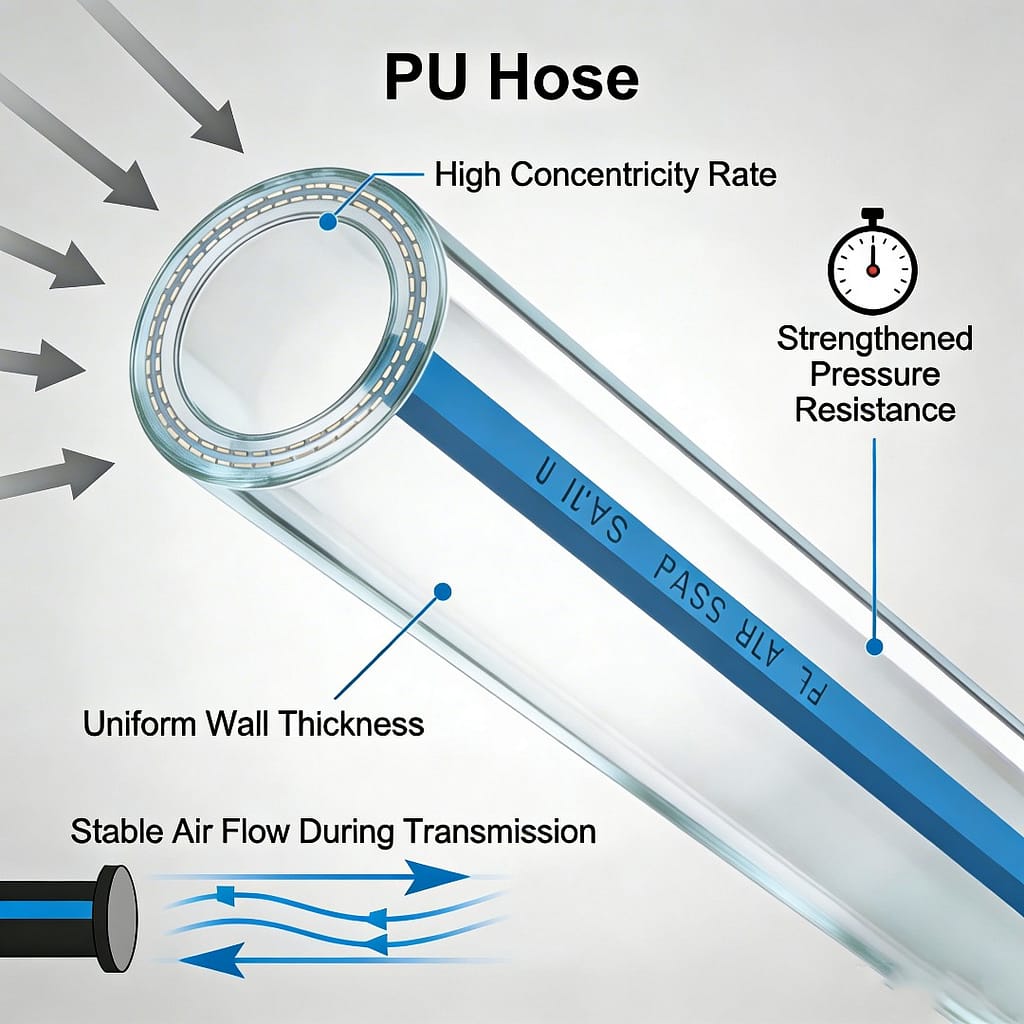
In this guide, we explore the essential factors for selecting the best polyurethane hose for industrial automationand how to match technical specifications with your specific application needs.
1. Why Choose Polyurethane (PU) Over Other Materials?
When comparing pneumatic PU tubing vs. PE tubing, PU offers superior kink resistance and “elastic memory,” meaning it returns to its original shape after bending.
- Flexibility: PU is much softer than Nylon, making it ideal for tight spaces and robotic arms.
- Abrasion Resistance: It withstands external friction better than PVC or Polyethylene.
- Chemical Stability: It resists fuels, oils, and many chemicals, which is vital for heavy-duty pneumatic air lines.
2. Key Technical Specifications to Consider
To ensure long-term performance, you must look beyond just the color. Focus on these high-pressure pneumatic PU tubing specifications:
Outer Diameter (OD) and Inner Diameter (ID)
Standard sizes like 6mm x 4mm PU hose or 8mm x 5mm pneumatic tubing are common. Ensure the OD matches your push-to-connect fittings perfectly to prevent air leaks.
Working Pressure and Burst Pressure
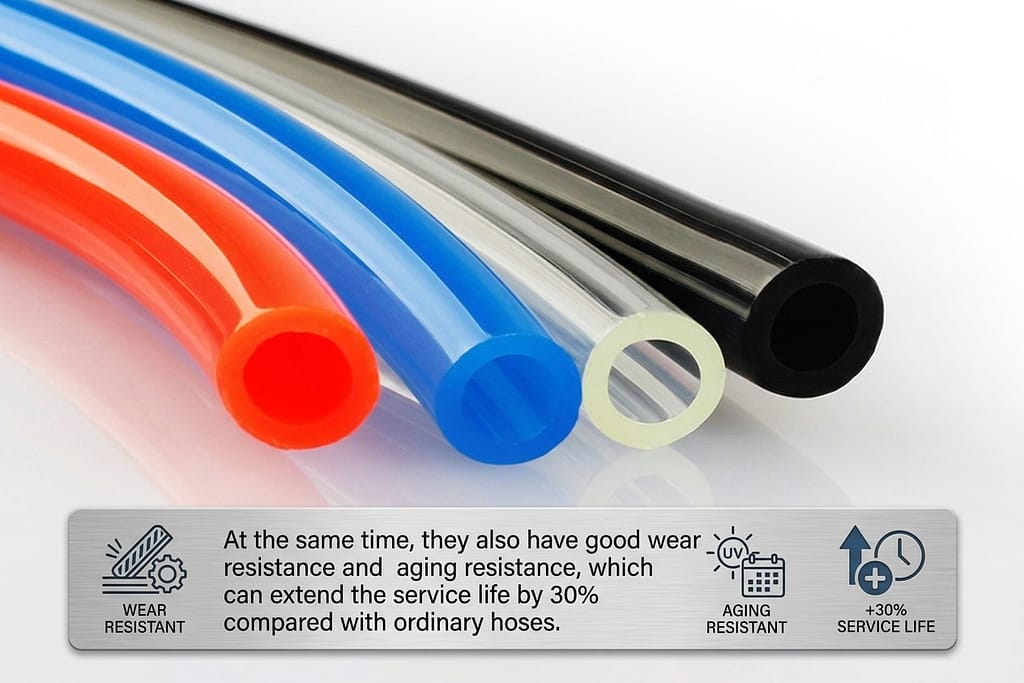
Most standard PU hoses handle a working pressure of 145 PSI (1.0 MPa) at room temperature. However, always check the safety factor (usually 3:1), meaning the burst pressure should be around 435 PSI.
Temperature Range
Standard PU performs best between -20°C to +80°C (-4°F to 176°F). For outdoor or high-heat environments, ensure your tubing is UV stabilized to prevent cracking.
3. Ether-based vs. Ester-based PU Tubing
This is a crucial long-tail keyword search for experts.
- Ester-based PU: Cheaper and has better oil resistance, but degrades in high humidity (hydrolysis).
- Ether-based PU: Ideal for water-related applications or humid environments, as it is hydrolysis resistant and anti-fungal.
4. Selecting PU Tubing for Specific Applications
Industrial Automation & Robotics
For high-speed pick-and-place machines, you need flexible polyurethane tubing for robotics that can handle millions of cycles without fatigue.
Air Tools and Compressors
For manual tools, a reinforced PU braided hose is recommended to handle the mechanical stress and higher pressure spikes.
Food & Medical Grade
If your application involves contact with food or medicine, ensure the hose is FDA compliant and NSF certified.
5. Common Maintenance Tips for Pneumatic Hoses
- Check the Bend Radius: Avoid exceeding the minimum bend radius to prevent flow restriction.
- Inspect Fittings: Ensure your one-touch pneumatic fittings are clean; debris can damage the PU wall and cause slow leaks.
- Environmental Protection: Use spiral hose protectors if the tubing is exposed to sharp metal edges.
FAQ: Frequently Asked Questions
What is the best size for a standard air compressor?
Most small-to-medium air tools use an 8mm OD PU hose, while heavy-duty industrial machinery may require 12mm or 16mm tubing to ensure adequate flow rate (CFM).
Can I use PU hose for water?
Only use Ether-based PU tubing for water. Standard Ester-based PU will become brittle and crack over time when exposed to moisture.
Are all PU hoses compatible with push-in fittings?
Yes, but the outside diameter (OD) tolerance must be precise (typically ±0.1mm) to ensure a vacuum-tight seal.
Conclusion
Investing in high-quality industrial grade pneumatic PU hoses reduces air energy loss and extends the life of your pneumatic cylinders and valves. Whether you need flexible air tubing for CNC machines or oil-resistant PU hoses, always prioritize material grade and pressure ratings.
Looking for a reliable supplier? Contact us today for a custom quote on bulk molded packaging solutions and premium pneumatic accessories.