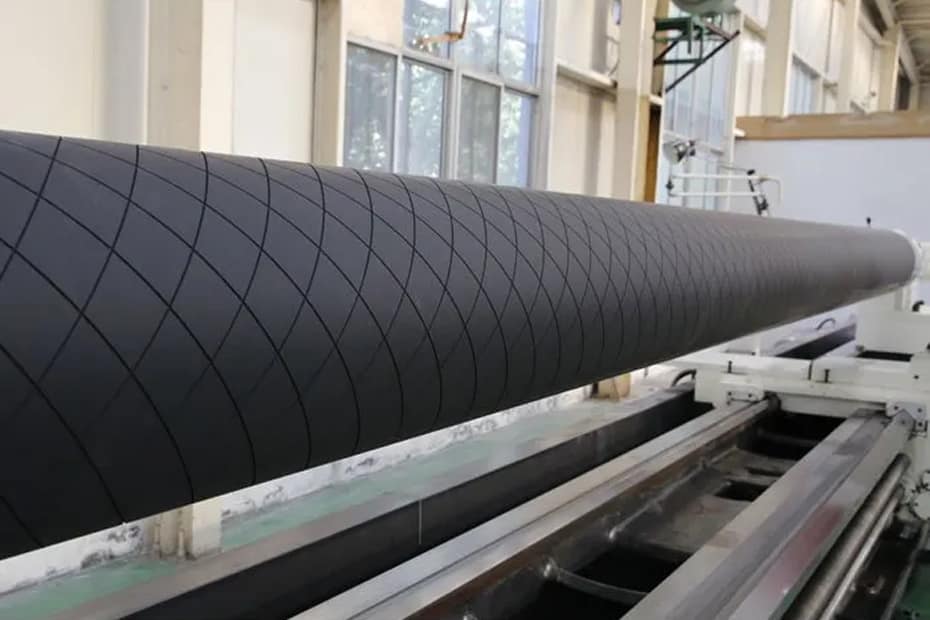
In modern high-speed manufacturing, productivity is often limited by the weight and vibration of metallic components. Industrial carbon fiber rollers have revolutionized processing lines by offering a lightweight alternative to traditional steel and aluminum rollers. At DISLAB, we engineer low-inertia composite shafts that allow for significantly higher line speeds, reduced energy consumption, and superior precision in demanding industrial environments.
The Strategic Advantages of Composite Roller Technology
Transitioning to carbon fiber roller shafts provides an immediate upgrade to your machinery’s performance. Unlike heavy steel rollers, our high-stiffness carbon fiber tubes minimize deflection even at extreme widths, ensuring consistent material tension.
- Significant Weight Reduction: Up to 80% lighter than steel, which drastically reduces rotational inertia and enables faster start/stop cycles.
- Reduced Vibration & Deflection: The high modulus of elasticity in our composite rollers ensures minimal bowing under high-speed operation.
- Anti-Corrosive Properties: Naturally resistant to chemicals and moisture, making them ideal for film processing rollers and textile finishing lines.
- Superior Critical Speed: A higher stiffness-to-weight ratio allows these rollers to operate at RPMs that would cause metallic rollers to vibrate uncontrollably.
Custom Engineering for Precision Applications
As a specialist in tailored industrial solutions, DISLAB provides end-to-end customization for your roller requirements. We don’t just provide the tube; we deliver a complete engineered roller assembly:
- Dynamic Balancing (G2.5/G6.3): Every precision carbon fiber roller is dynamically balanced to ensure zero-vibration performance at operational speeds.
- Specialized Surface Coatings: We offer various finishes, including anti-static, rubber-coated, tungsten carbide, or ultra-smooth hard-anodized surfaces to suit specific material handling needs.
- Hybrid End-Fitting Integration: We utilize proprietary bonding techniques to secure stainless steel or aluminum journals to the carbon fiber body, ensuring maximum torque transfer.
- Tapered or Parallel Profiles: Custom geometries are available to manage web tracking and prevent material wrinkling in converter machinery.
Technical Specifications at a Glance
| Roller Technical Feature | Specification Details |
|---|---|
| Rotational Inertia | Reduced by 60-80% compared to Steel Rollers |
| Balancing Grade | Dynamic Balancing up to G2.5 (High-Speed Precision) |
| End-Fitting Bonding | Advanced Structural Adhesive + Mechanical Interference Fit |
| Surface Accuracy | Concentricity and Runout within ±0.02mm |
| Typical Coatings | Teflon, Hard Chrome, Rubber, or Plasma Ceramic Spray |
Key Applications for Carbon Fiber Rollers
Our wholesale carbon fiber roller shafts are the gold standard for industries requiring precision and speed:
- Printing & Packaging: High-speed flexographic and gravure printing where low-inertia rollers improve registration accuracy.
- Film & Foil Converting: Precision web handling rollers that prevent scratching and maintain perfect tension across wide spans.
- Textile Industry: Durable, lightweight rollers for dyeing, finishing, and weaving machinery.
- Battery Manufacturing: Specialized non-conductive carbon fiber rollers (with glass fiber outer layers) for lithium-ion battery production lines.
Upgrade Your Machinery with DISLAB Expertise
Precision in the lab leads to efficiency on the factory floor. Whether you are designing a new high-speed line or retrofitting existing equipment with high-performance composite rollers, DISLAB provides the technical data and manufacturing precision you need.
[Request a Technical Consultation] today to optimize your line speed with our carbon fiber engineering team.